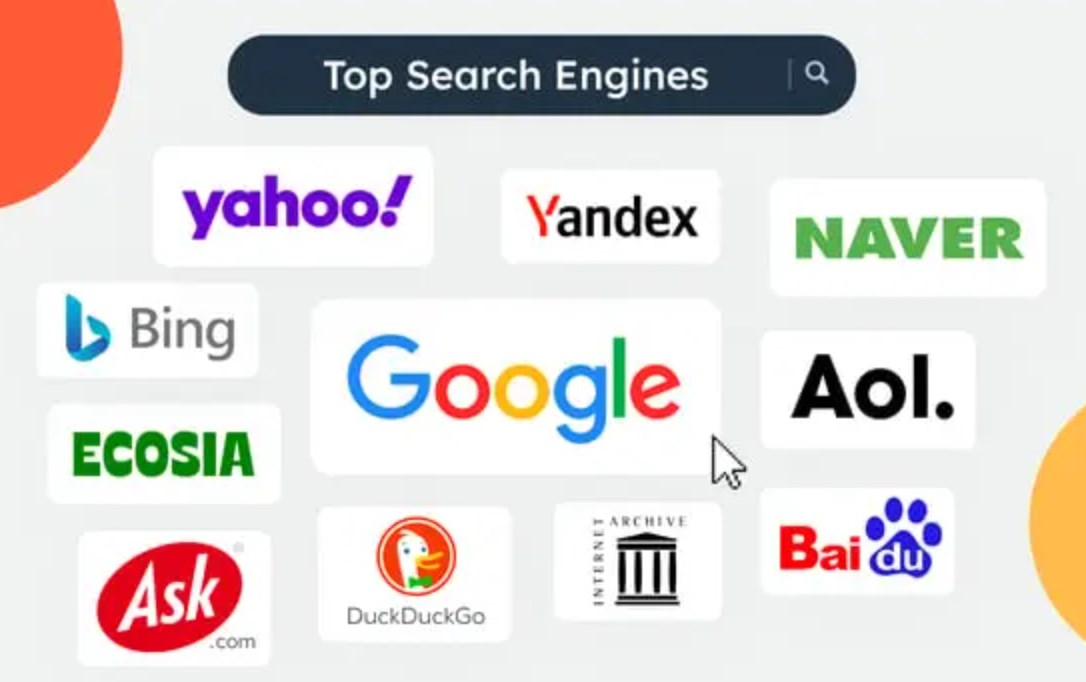
Discovering Beyond Google: 13 Search Engines Redefining Online Exploration in 2024

Regarding search engines, Google has long been the undisputed champion, dominating the digital landscape with unparalleled reach and precision. However, many alternative search engines offer unique features, privacy options, and specialized search experiences in a world driven by innovation and diversity. Here are 13 search engines other than Google redefining online exploration in 2024.

DuckDuckGo

DuckDuckGo prioritizes user privacy above all else, offering a browsing experience free from tracking and personalized ads. By avoiding collecting user data and delivering unbiased search results, DuckDuckGo has earned the trust of privacy-conscious individuals seeking a more secure alternative to traditional search engines.

Bing

Microsoft’s Bing offers a visually appealing interface and delivers relevant search results, making it a strong contender in the search engine market. With integration across Microsoft’s suite of products, including Office and Outlook, Bing provides users with seamless access to information and services across various platforms.

StartPage

StartPage provides users with the familiarity of Google search results while prioritizing user privacy and anonymity. By delivering search results sourced directly from Google without tracking user data, StartPage offers a compromise-free browsing experience for those seeking privacy without sacrificing search accuracy.

Ecosia

Ecosia stands out for its unique environmental mission, using search ad revenue to fund tree planting projects worldwide. Users can contribute to reforestation efforts and combat deforestation by simply searching the web, making Ecosia a compelling choice for environmentally conscious individuals looking to make a positive impact through their online activities.

Yahoo

Despite its decline in popularity, Yahoo remains a versatile search engine, offering a range of services beyond traditional web search. Yahoo continues to serve as a multifaceted platform for users seeking diverse content and experiences online, from news and finance to entertainment and email.

Yandex

Designed for Russian-speaking users, Yandex provides localized search results, language support, and a suite of services tailored to the needs of its audience. With features like maps, weather forecasts, and translation tools, Yandex offers a comprehensive search experience for users in Russian-speaking regions.

Qwant

Qwant strongly emphasizes user privacy and data protection, delivering comprehensive search results while ensuring user anonymity and confidentiality. By sourcing results from various sources, including social media and news outlets, Qwant provides users with a holistic view of the web while safeguarding their personal information.

Swisscows

Swisscows is a family-friendly search engine, offering safe and accurate search results suitable for users of all ages. With a commitment to filtering out inappropriate content, Swisscows provides parents and guardians peace of mind while allowing children to explore the web in a safe and controlled environment.

Gibiru

Gibiru enables users to access uncensored information and search results that may be restricted on traditional search engines. By bypassing filters and censorship, Gibiru empowers users to explore a wide range of content and perspectives without limitations or restrictions.

Mojeek

As an independent search engine, Mojeek provides unbiased and ad-free search results sourced from its web index. Focusing on transparency and neutrality, Mojeek offers users an alternative to mainstream search engines, free from the influence of personalized ads and algorithmic biases.

OneSearch

Developed with user privacy in mind, OneSearch encrypts search terms and emphasizes transparent privacy practices. By offering a secure and confidential search experience, OneSearch addresses growing concerns about online privacy and data security, providing users with peace of mind while browsing the web.

Boardreader

Tailored for users seeking online discussions and community forums, Boardreader aggregates search results from various forums and social media platforms. By enabling users to explore diverse conversations and topics, Boardreader is a valuable resource for those looking to engage with like-minded individuals and communities online.

Ekoru

Like Ecosia, Ekoru is committed to environmental sustainability, using some of its revenue to support ocean conservation projects. Users can contribute to marine protection efforts simply by searching the web.

In conclusion

While Google remains the dominant force in the world of search engines, the landscape is evolving, offering users many alternatives catering to various preferences and priorities. Whether you prioritize privacy, environmental sustainability, or uncensored access to information, these 13 search engines offer compelling alternatives to explore in 2024 and beyond. Embrace the diversity of online search and embark on a journey of exploration with these innovative platforms at your fingertips.

10 Crucial SEO Mistakes to Avoid for Sustainable Online Success

In the dynamic realm of SEO, evolution is constant, with only a few core principles remaining static. A decade ago, the crux of improving website rankings was centered around targeting keywords. However, today, the significance lies not just in selecting keywords, but in choosing the right ones. Moreover, with the advent of new algorithms, several software tools have emerged to aid marketing strategies.

While Google Search results offer a plethora of SEO tips and tricks, many of these may inadvertently harm rather than benefit your website in the long term. Understanding where you might be going wrong with SEO is crucial. Steering clear of common pitfalls lays a solid foundation for experimenting with new strategies in 2021.

Every new year presents an opportunity to set higher marketing goals. For newcomers to the digital marketing arena, navigating the landscape can be daunting, making it challenging to discern the right strategies to adopt. Amidst a sea of questions and guides, it’s not uncommon to stumble into common mistakes. To address this, let’s explore some of these missteps along with suggestions for overcoming them.

Neglecting Local SEO Optimization

Local SEO optimization is essential for businesses targeting local customers. Neglecting this aspect can result in missed opportunities for attracting nearby clientele.

  • Claim and optimize your Google My Business listing.
  • Ensure consistency in NAP (Name, Address, Phone Number) across all online platforms.
  • Encourage customer reviews and respond promptly to feedback.
  • Utilize local keywords and geographic modifiers in content and meta tags.
  • Participate in local events and sponsorships to enhance visibility within the community.

Not Knowing Your Audience

Understanding your audience is fundamental to successful SEO. Failing to identify your target demographic can hinder progress significantly. Companies that grasp their audience’s preferences at a granular level tend to outperform competitors. Skipping audience analysis and diving straight into technical aspects can render your efforts ineffective.

  • Conduct market research to understand macro trends.
  • Utilize historical and real-time data to gauge audience interests.
  • Optimize timing using Google Analytics tools.
  • Align keyword selections with consumer intent.

Not Being Up to Date

While quality content is essential for SEO, ensuring its relevance to current trends can bolster effectiveness. Staying updated minimizes mismatches between user intent and content.

  • Subscribe to relevant newsletters.
  • Establish a content posting schedule.
  • Engage with industry communities and marketing channels for timely updates.

Just Wing It: Not Having a Roadmap or SEO Plan

Operating without a plan may yield sporadic results but lacks sustainability. Establishing a roadmap aligns efforts with marketing goals and improves long-term outcomes.

  • Identify technologies to streamline workflow.
  • Delegate roles for content creation, digital alignment, and site updates.
  • Break down tasks and set measurable goals.
  • Analyze competitor strategies for insights.

Publishing Non-Original Content

Creating original content is paramount for SEO success. Duplicating content or producing thin content compromises credibility and rankings.

  • Craft compelling headlines.
  • Avoid content spin-offs; invest in research and creation.
  • Attribute information to trustworthy sources.

Ignoring Search Features and Structured Data

Structured data enhances website visibility and user experience. Leveraging structured data markup improves search engine rankings and enhances internal search functionality.

  • Implement structured data for various content types.
  • Optimize internal search functionality for seamless navigation.

Not Using Enough Headings and Lists

Organizing content with headings, subheadings, and lists enhances readability and engagement. Proper formatting increases the likelihood of featured snippets, boosting SERP visibility.

  • Break down paragraphs with subheadings.
  • Employ bullet points for easy scanning.
  • Include a table of contents for lengthy content pieces.

Not Focusing on Branded Anchor Text

Strategic use of anchor text is crucial for SEO. Balancing optimization without overdoing it is key to maintaining search engine favor.

  • Avoid links from toxic sites.
  • Use no-follow links for questionable references.
  • Diversify anchor text for internal links.

Skipping Meta Descriptions and Title Tags

Meta descriptions and title tags contribute to search engine understanding and user click-through rates. Properly optimized tags improve search visibility and user engagement.

    • Craft unique and descriptive meta tags for each page.
    • Strategically place keywords in titles and descriptions.
    • Adhere to Google’s best practices for titles and snippets.

Not Optimizing for Mobile

Mobile optimization is imperative as mobile usage surpasses desktop. A responsive design and fast loading times are critical for user satisfaction and SEO performance.

  • Ensure responsive design for all devices.
  • Create mobile-friendly content.
  • Prioritize fast load times to reduce bounce rates.

General Tips for SEO Starters

  • Prioritize website speed optimization.
  • Select relevant content for outbound links.
  • Focus on user-centric content creation.
  • Cultivate backlinks from reputable sites.
  • Implement web analytics from the outset.
  • Craft unique meta descriptions for every page.
  • Keep URLs concise and descriptive.
  • Cultivate social signals for momentum.
  • Optimize image alt text with relevant keywords.
  • Maintain a consistent posting schedule.

Regardless of whether you’re a B2B or B2C marketer, mistakes are inevitable. What sets apart success in this field is the ability to learn from these mistakes and implement positive changes.

Exploring the Top 8 Search Engines Shaping the Digital Landscape

In today’s digital age, search engines play a pivotal role in how we access information and navigate the vast expanse of the internet. From finding answers to complex questions to discovering the latest news and trends, search engines are indispensable tools for modern tech-savvy individuals. In this comprehensive guide, we’ll delve into the top 8 search engines that are shaping the digital landscape, providing insights into their features, market share, and impact on our online experiences.

Google

The Undisputed Leader Google reigns supreme as the top search engine globally, commanding over 72% of the market share. As the third most valuable company in the US, Google’s influence extends far beyond search, with products and services spanning across various industries. Despite its dominance, Google faces both praise and criticism for its algorithms and data practices, underscoring its central role in shaping the digital landscape.

Yahoo

A Multimedia Search Engine Yahoo.com, initially known for its email services, has evolved into the third-largest search engine globally. With a market share of over 3.90%, Yahoo.com offers a range of additional features, including photo sharing and backlink reporting services. As the default search engine for Mozilla Firefox in the USA, Yahoo.com continues to be a popular choice among users.

Bing

Microsoft’s Challenger to Google Bing, Microsoft’s attempt to challenge Google’s dominance, holds approximately 6% of the search engine market share. With features like better picture quality and interface innovations, Bing offers a compelling alternative to Google. As the default search engine in Microsoft’s Edge browser, Bing continues to innovate and refine its search capabilities.

DuckDuckGo

The Privacy-Focused Search Engine DuckDuckGo has gained popularity among privacy-conscious users for its commitment to data security and anonymity. With a clean interface and robust privacy features, DuckDuckGo offers a viable alternative to mainstream search engines. Despite its relatively small market share of 0.25%, DuckDuckGo processes over 30 million searches per day, reflecting its growing popularity among modern techies.

Wolfram Alpha

The Computational Knowledge Engine WolframAlpha distinguishes itself as a “Computational Knowledge Engine,” catering to data scientists, analysts, and AI enthusiasts. This search engine specializes in providing stats and numerical data on a wide range of topics. With its ability to perform complex theoretical and mathematical calculations, WolframAlpha serves as a valuable resource for professionals in various fields.

Baidu: China’s Leading Search Engine Founded in 2000, Baidu has emerged as the dominant search engine in China, serving over a billion queries per month. With an impressive market share increase rate, Baidu ranks fourth among the top websites globally. As China’s go-to search engine, Baidu plays a crucial role in shaping the online landscape of the world’s most populous country.

AOL.com

A Legacy Search Engine AOL.com, acquired by Verizon Communications in 2015, maintains a market share of over 0.6% globally. While not the largest search engine, AOL.com hosts popular websites like Techchrunch.com and Huffingtonpost.com, making it a preferred web portal for many users. With its legacy status and diverse content offerings, AOL.com continues to be a prominent player in the search engine market.

Ask.com

The Human-Powered Search Engine Ask.com adopts a unique approach to search with its question-answer format, relying on human-powered directories for search results. Despite its niche focus, Ask.com commands a market share of 0.42% and serves as a valuable resource for users seeking curated answers to specific queries.

Conclusion

From privacy-focused alternatives like DuckDuckGo to multimedia giants like Google, the world of search engines is diverse and dynamic. Each search engine brings its unique features and capabilities, catering to different user needs and preferences. As we navigate the digital landscape, understanding the top search engines and their impact is essential for making informed decisions and optimizing our online experiences.